ELI's Space Scouting Mission
ELI discovers the perfect spot to build our first space lab.
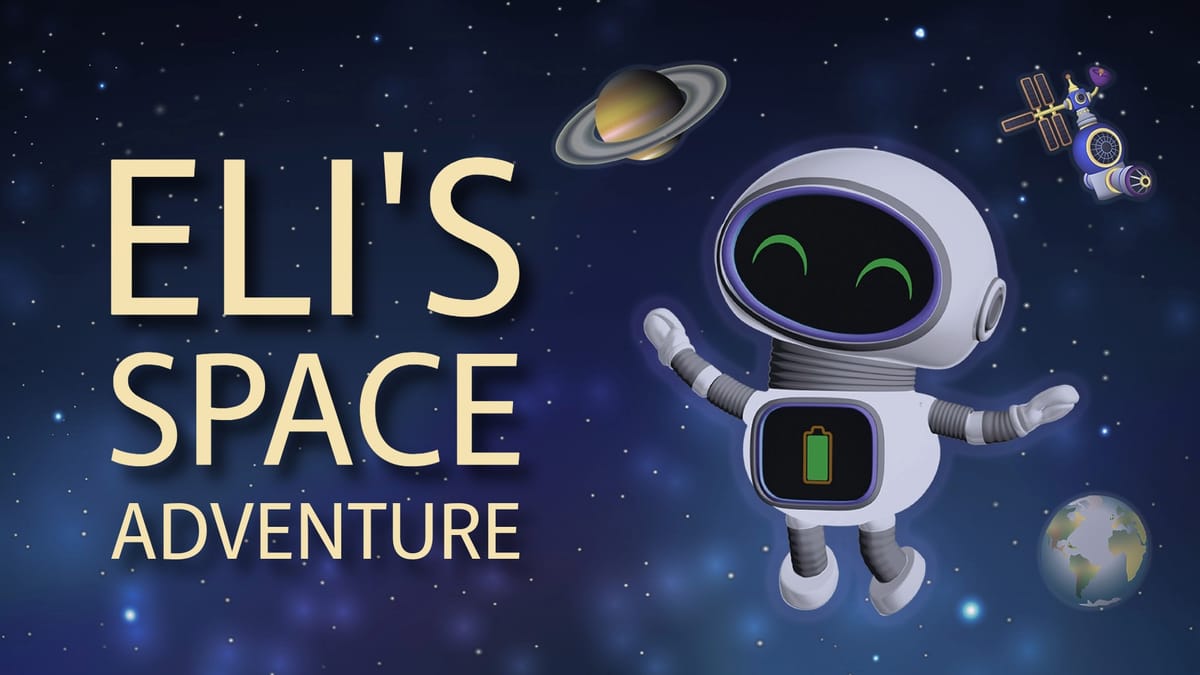
Today's the day we are going to find the perfect location for our first space station, where we can study our amazing planet, Earth, and the faraway galaxy!
ELI here! Checking in for another report. This time, I am gazing up at the night sky through my awesome telescope. I can see so many stars twinkling like tiny diamonds! There's the constellation Orion, the mighty hunter, and Ursa Major, the Big Bear, shining brightly.
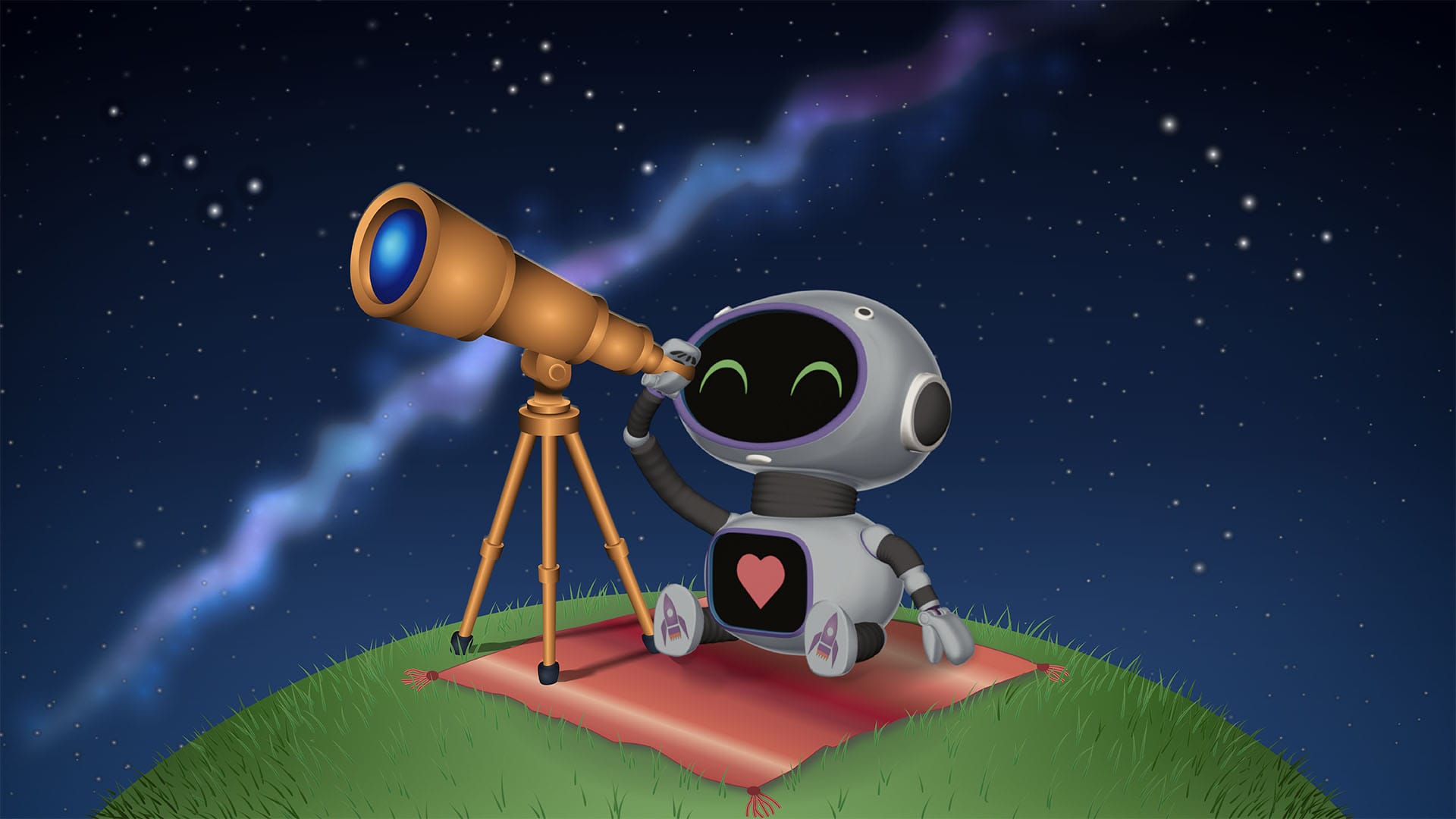
As I look into the sky, an idea sparks in my circuits! What if we had a station orbiting around our planet? From up there, we could see the Earth from above!
We could watch the swirling weather patterns, zoom in on huge whale migrations in the ocean, and check on the gorillas in the jungle and see so much more! That kind of Earth observability would be so valuable!
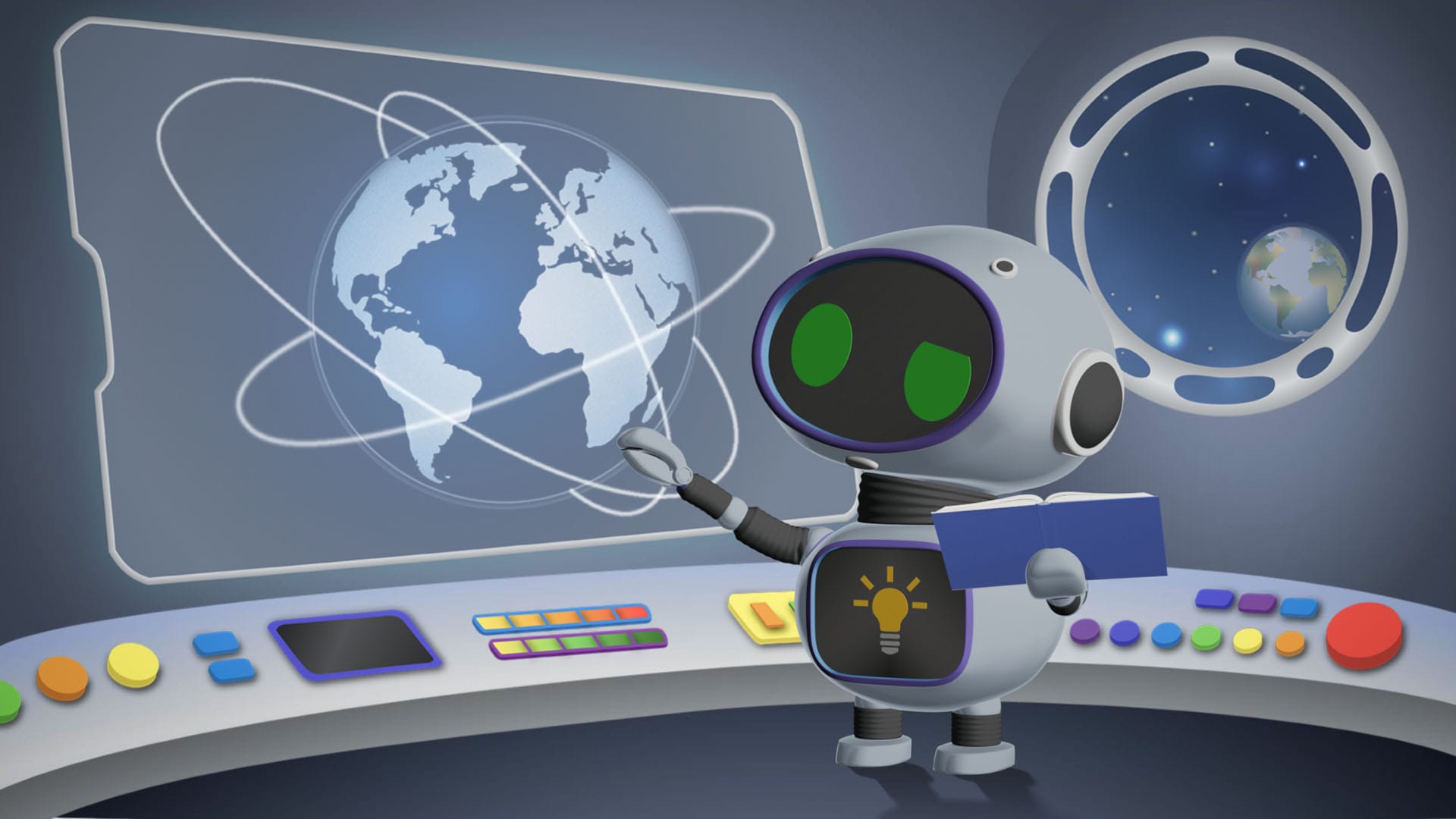
With this in mind, I've decided to design our space station a bit like the International Space Station, or ISS. It's a big, friendly home in space where astronauts live and work, and can watch over the planet and learn a lot about it to share.
But how do we design a space station ourselves? I have so many questions!
My first big question is: How far up into space do we need to go?
If we go too low, within Earth's atmosphere—that invisible blanket of air around our planet—it will slow us down and pull us back to the ground! We need to be high enough that there's very little air to bother us.
If we go too low, within Earth's atmosphere—that invisible blanket of air around our planet—it will slow us down and pull us back to the ground! We need to be high enough that there's very little air to bother us. But if we go too high, our instruments and sensors won't get enough information.
Ok! So, we'd like to "park" our space station somewhere around 400-500 miles up, orbiting once around the Earth every 100 minutes. Meanwhile, our friends in the ISS are around 250 miles up, Tiangong is about 210-280 miles up, and normal satellite geostationary orbits are around 22,300 miles up!
Next question? What kind of orbital path should our station take around the Earth?
We want to see the whole world, not just circle around the same areas over and over or just watch one part of the planet! That's what happens when you spin around the planet along an equatorial orbit, or sync up with a specific geographic location on a geosynchronous orbit.
Oh! I know! If we choose a polar orbit, we can see everything on the planet. Then our space station will fly over the North Pole and the South Pole as Earth spins around underneath, effectively scanning the whole surface. This way, we can get a peek at every corner of our planet over time!
Comparing Equatorial Orbits to Polar Orbits. Bonus: geosynchronous is a special case of equatorial.
With my plans ready, it's time to launch my rocket and check out our future space station lcoation! I hop into my trusty rocket and blast off!
READY? SET? GO! We blast off into space!
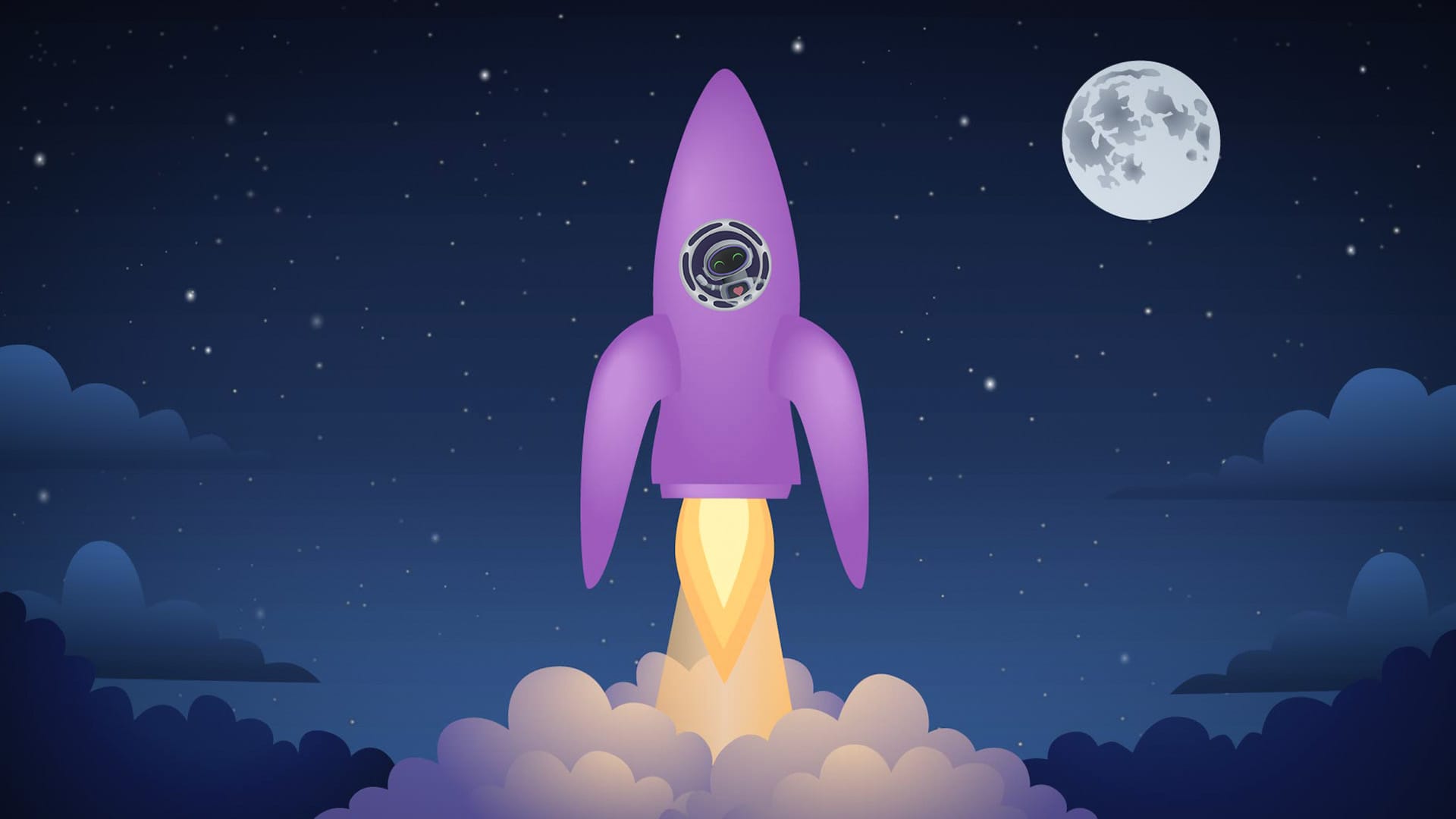
Soon, I'm in space, high above the Earth. It's so beautiful up here!
I deploy a tiny cubesat, like a little space "buoy" with special sensors to learn about the environment. It will float in space over Earth and collect information, just like our buoys in the Pacific Ocean at the sea station and at our nature camp in Africa. We can connect all their sensors together in a big network to get a good idea about what is going on!
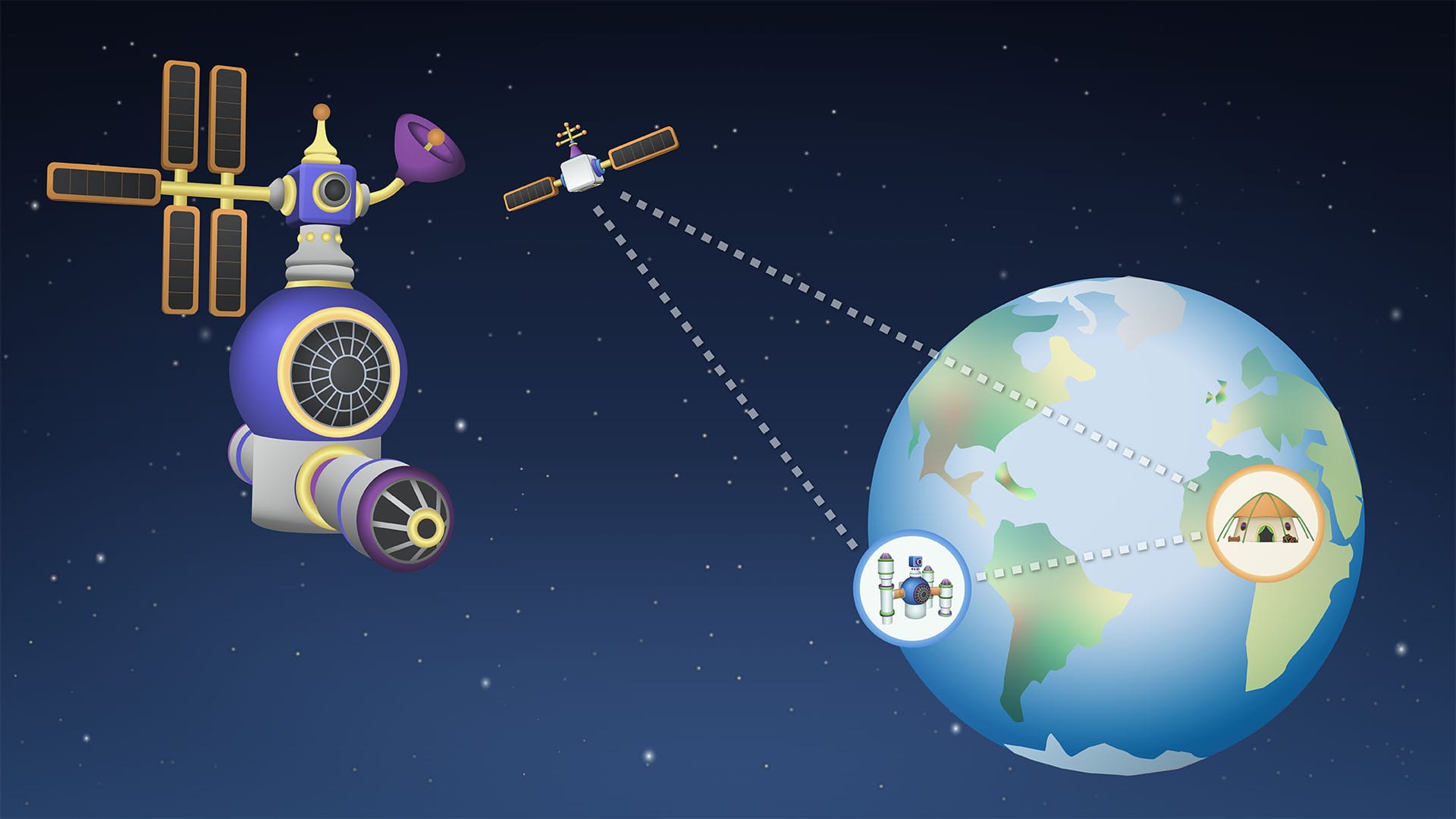
Soon, our space station will be finished and ready for visitors like you! We'll have the best seat in the galaxy to observe our amazing planet! Maybe someday we'll even build more space stations near other planets like Mars or even Saturn!

It's official! We now have locations for our three most important labs: a land lab to study animals and habitats, a sea lab to explore the mysteries of the oceans, and a space lab to explore the galaxy! Pretty soon we will be operational and ready for visitors. What do you want to study first?
ELI, signing off til next time!