I-SPY: Sunspots
Learn about sunspots!
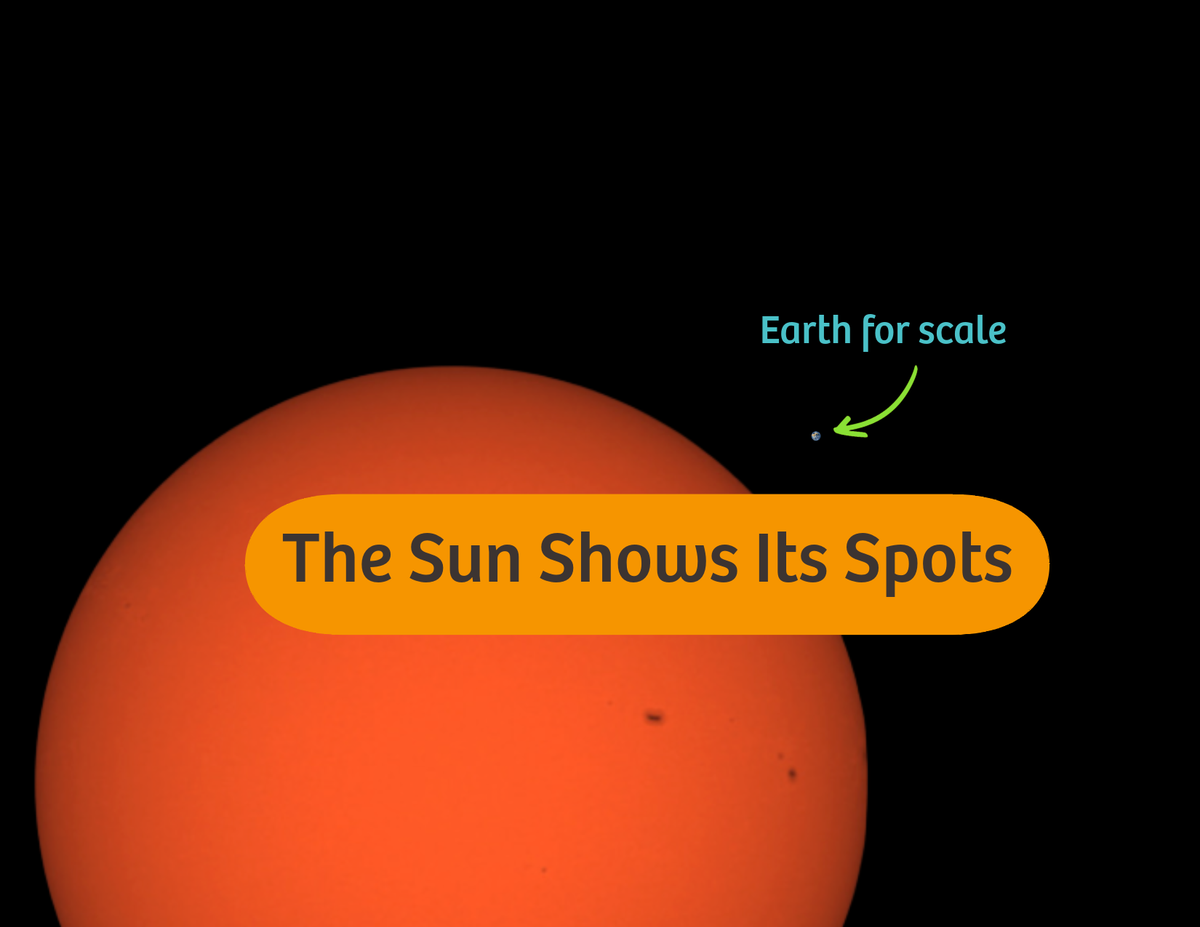
Today we turn our telescopes toward the sun! While you can do this at home, you need special filters on your telescope to point at this hot star! What do we see? Dark spots on the sun! And no, they aren't dirt on the telescope lens. Those are sunspots!
So, what is a sunspot?
It's just a part of the Sun that isn't as hot as the areas around it. While they look small in the telescope, they are actually often a lot bigger than our planet!
Sunspots are caused by changes in the Sun's magnetic field. Sometimes, when those magnetic fields on the sun's surface change quickly, causing a sudden burst of energy, called a solar flare. These events often happen near sunspots, which are numbered as active regions, or ARs, and watched by astronomers.
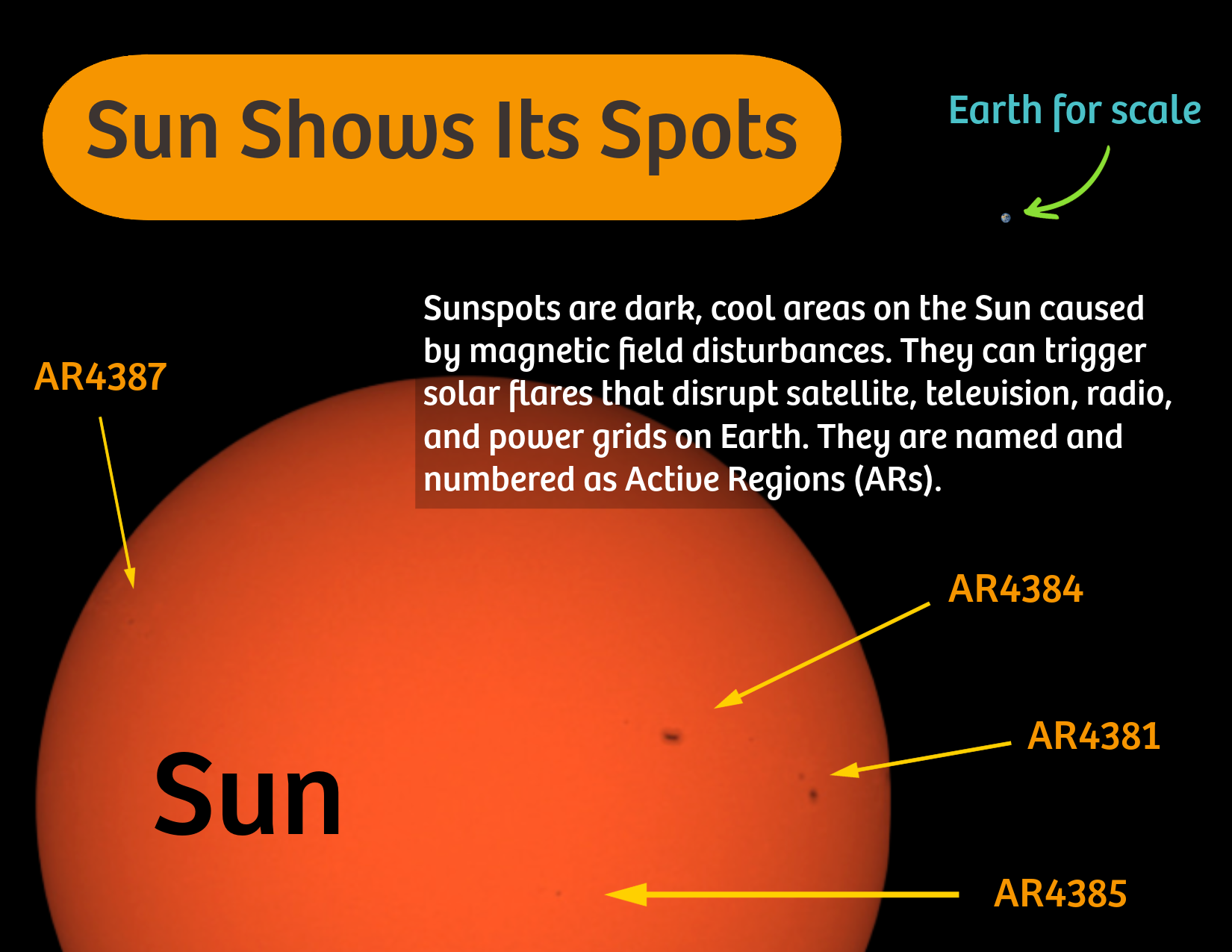
When a solar flare burst occurs, the solar flare sends energy radiating outwards into the solar system. That energy can travel the 93 million miles (150 million kilometers) to Earth and affect us in all sorts of ways! The internet, radio and satellite communications can all be disrupted by these events. Your car GPS might stop working and our communications amongst our space stations may glitch.
It's not all bad, though! These energy bursts also make for beautiful auroras in the sky, especially near the north and south poles.