I-SPY with a Home Telescope
Pointing a home telescope up at the moon and nearby nebula!
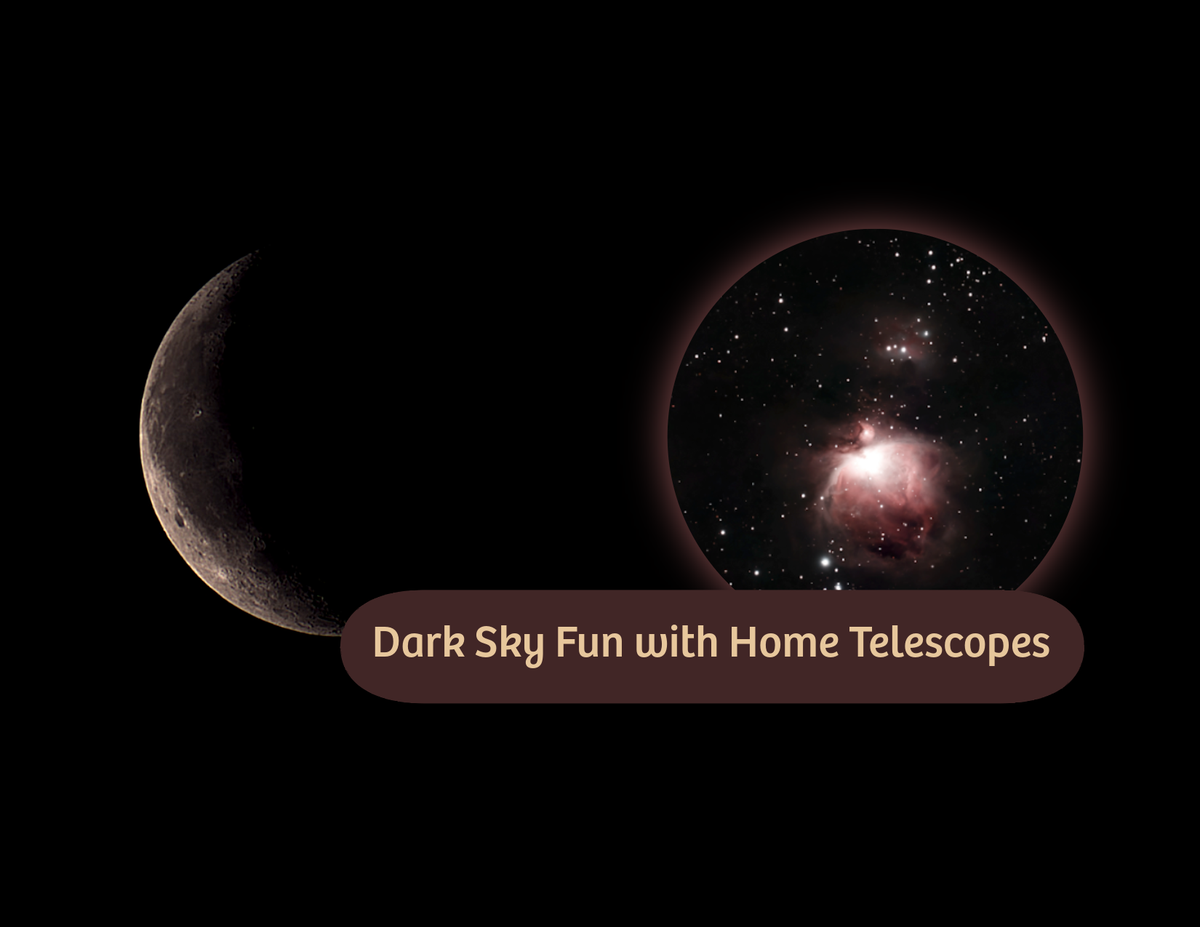
You don't need a giant space telescope to be a scientist. With a home telescope and good observation skills, you can see craters on the Moon and nurseries where stars are made! Tonight, ELI points the telescope toward the dark night sky to see what else was out there. You can, too!
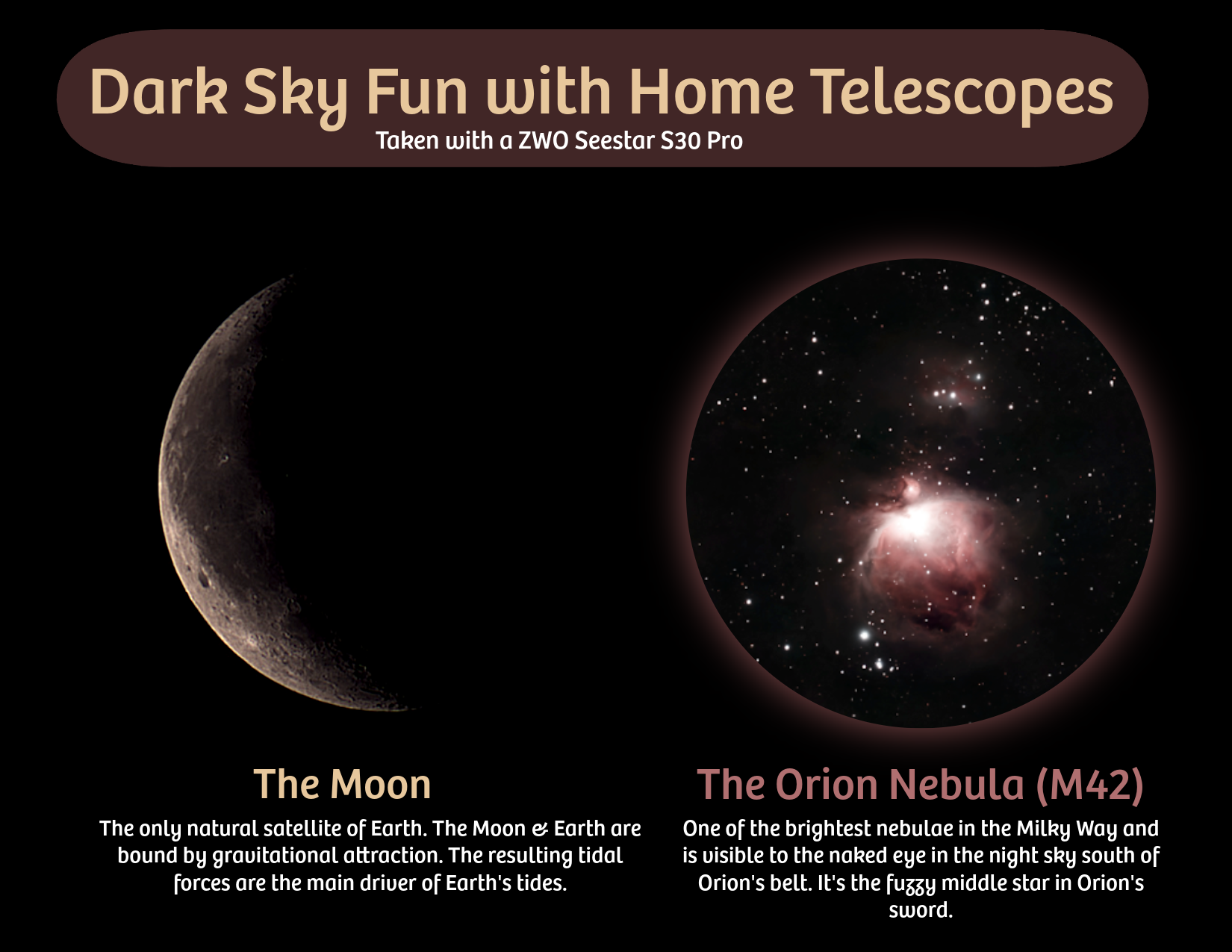
Our Moon
Even though the Moon looks like it's glowing, it’s actually reflecting light from the Sun. Through the telescope, ELI saw a crescent moon. The Moon is Earth's only natural satellite, which means it travels in a loop around our planet. Because of gravity, the Moon and Earth pull on each other, and this force is actually what creates the tides in our oceans!
A Star Nursery
Eli looked much further away—past our solar system—to find a "fuzzy" patch in the sky called a nebula. A nebula is a giant cloud of dust and gas in space. This one, called the Orion Nebula (M42), is a special place where brand-new stars are born! Even though it looks like a small cloud through the lens, it is actually trillions of miles wide.
Want to find Orion Nebula yourself?
Finding the Orion Nebula is a great mission for a young astronomer because it is one of the easiest "deep space" objects to spot. You don't need a massive telescope. You can observe it with your own eyes or a pair of binoculars, too!
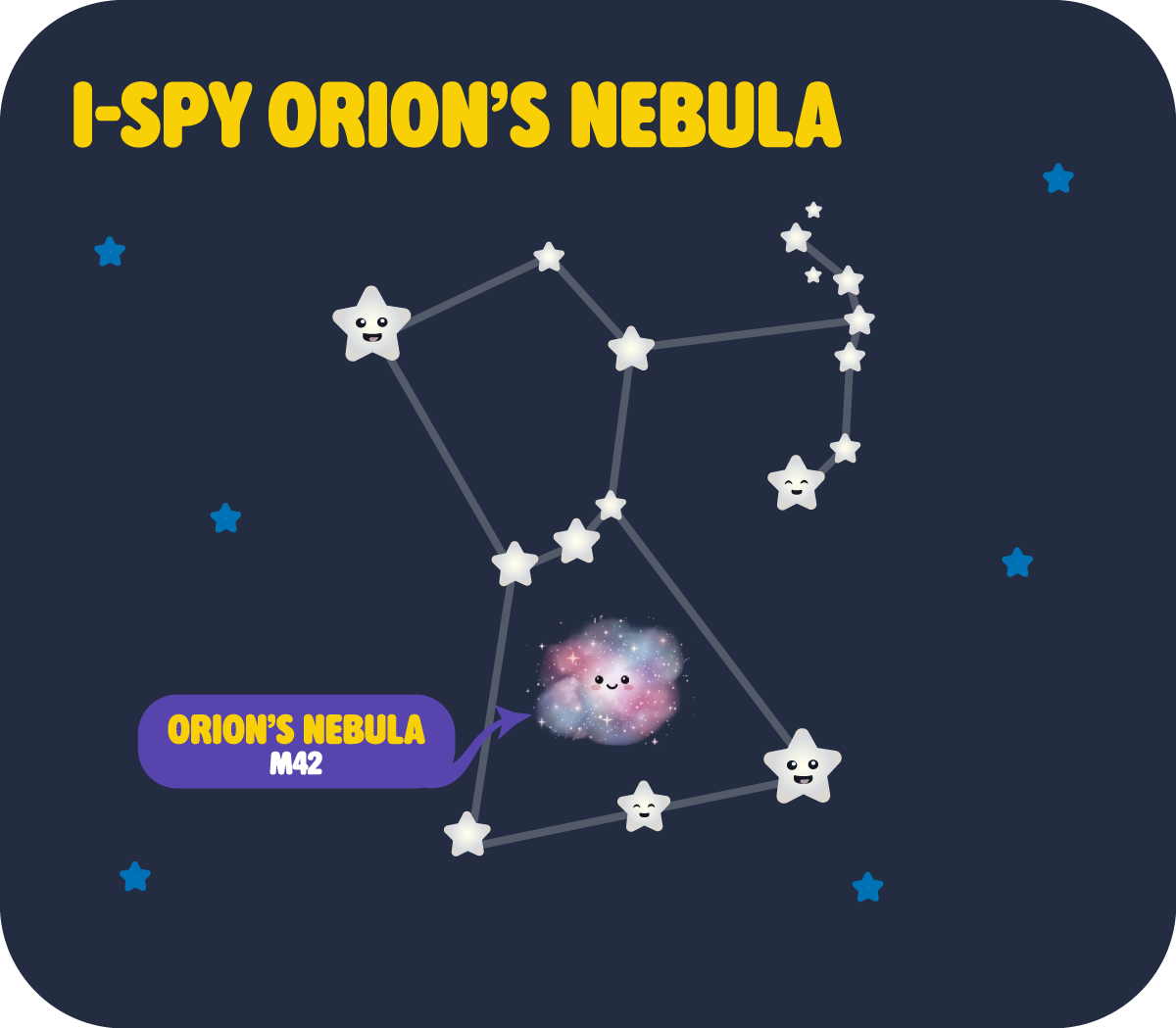
Step 1: Find the Hourglass
First, look toward the south in the winter or spring sky. Look for the constellation for Orion the Hunter. He looks like a giant hourglass made of bright stars.
Step 2: Location Orion's Belt
In the middle of that hourglass, you will see three bright stars in a perfectly straight line. This is Orion’s Belt. It is very easy to spot because the stars are so close together and evenly spaced.
Step 3: Find the Sword
Look just below the belt. You will see a smaller line of three dimmer stars hanging down. This is Orion’s Sword. The fuzzy middle star on the sword is Orion's Nebula!