Whale Shark Encounter
ELI encounters a whale shark and its community in the Indian Ocean.
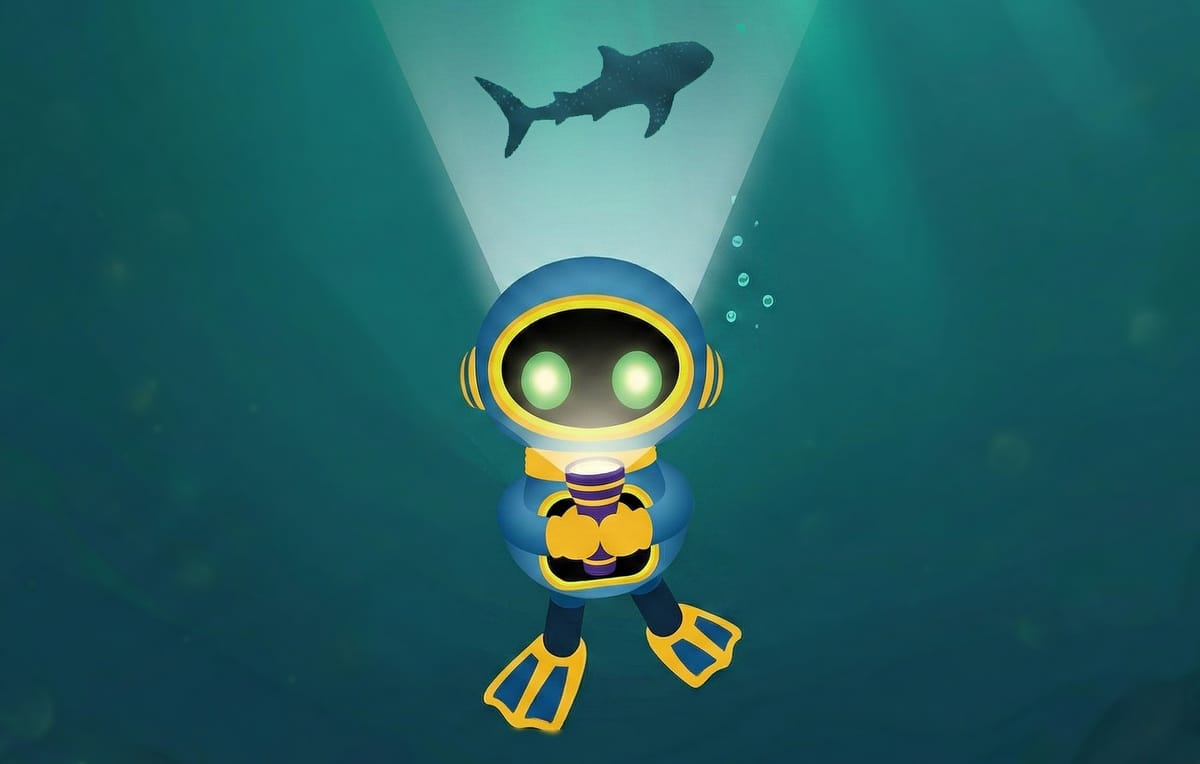
Location: Ningaloo Reef, Indian Ocean
Current Depth: 10 meters
The water here is crystal clear. I am scanning the seafloor to find a flat, sandy spot for our new underwater sea lab. Suddenly, a massive shadow moves above me. I look up and see a giant whale shark swim by, its belly covered with tiny fish.
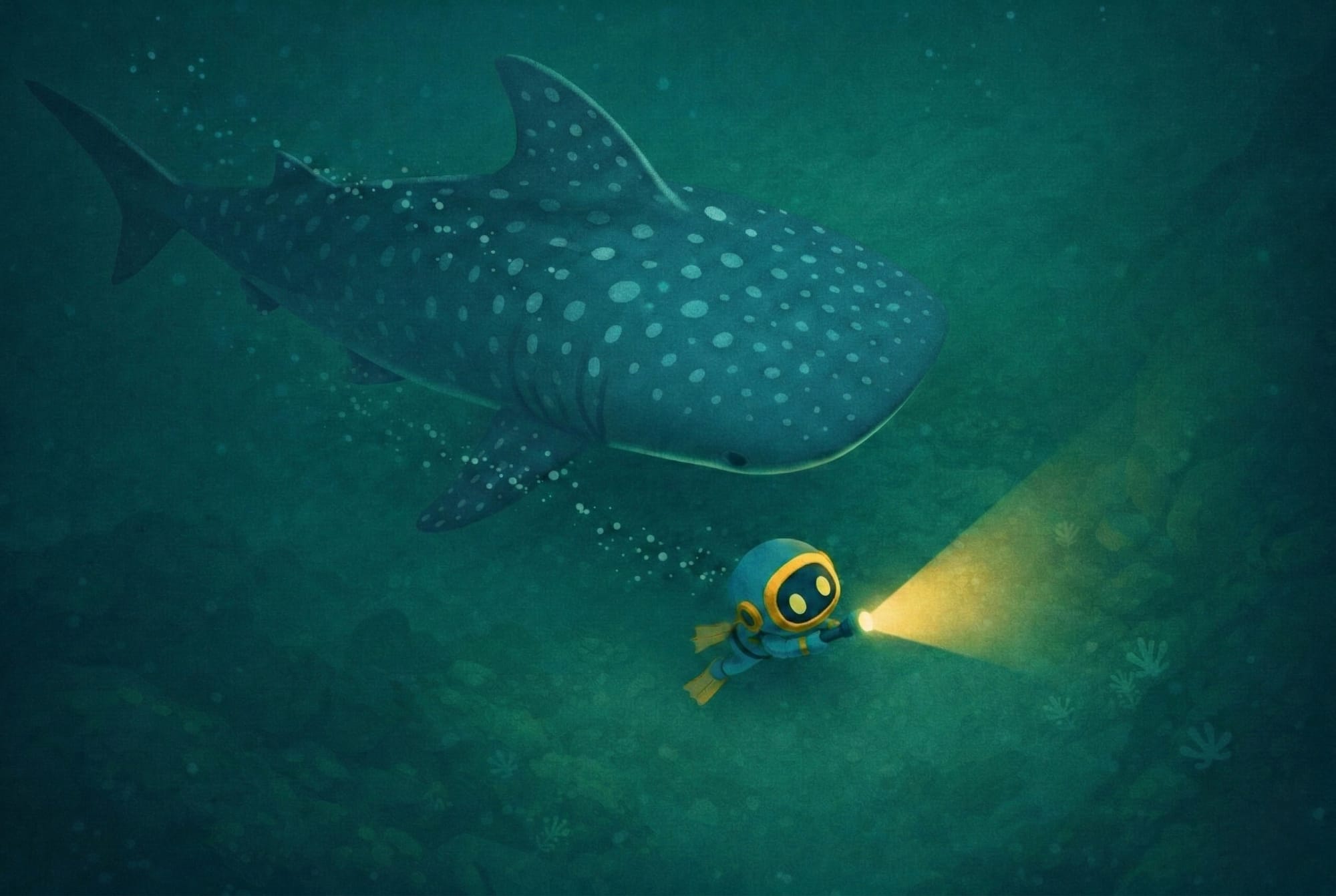
This is a great time to use our observation skills and my dive light!
Whale sharks are the largest fish in the sea, after all. They can swim for thousands of miles to warm waters like these, where they can feed.
These giant fish have a funny name. Whale sharks are sharks, not whales. Whales are air-breathing mammals and some are much larger than whale sharks. Fish, such as the whale shark, have gills to extract oxygen from the water instead.
I feel very small as I swim alongside this magnificent fish, which is as long as a school bus. Its skin is dark blue-gray and covered in white spots and stripes.
Each whale shark has a different pattern of spots. These unique markings, like the shape of a whale's tail, are used by scientists to tell which shark is which.
This one has a large, wide mouth. No sharp teeth, here, though! These gentle giants are filter feeders, eating plankton, the tiniest drifting plants and animals in the ocean.
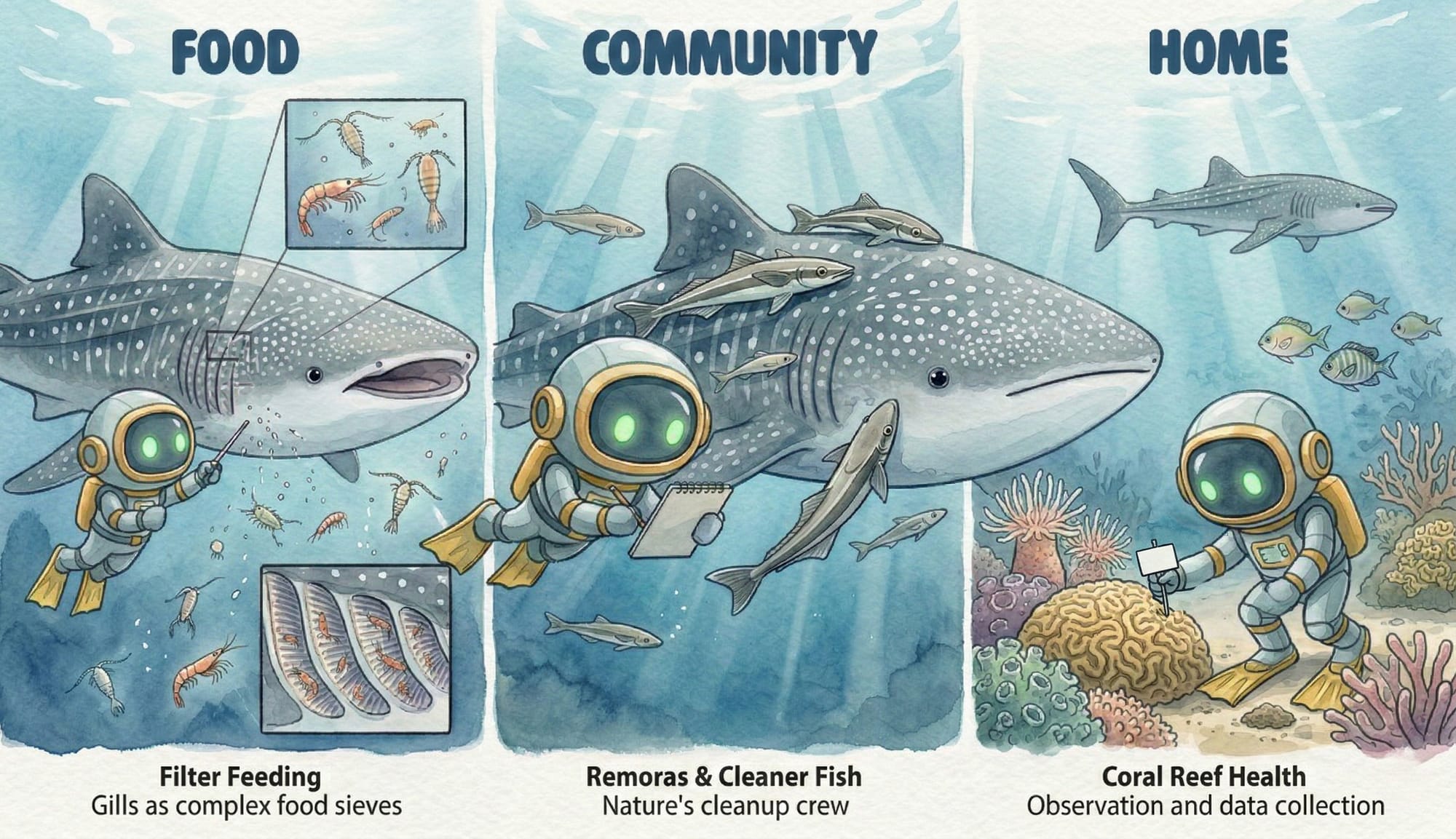
A Helping Hand (or Fin)
I notice several smaller, slender fish clinging to the whale shark's belly and sides. These are remoras, also known as suckerfish. They are the ultimate ocean hitchhikers.
The remora fish have a specialized fin that acts as a gentle suction cup, sticking itself to the side of the whale shark to take rides through the ocean. The remora can easily travel between feeding grounds on the larger shark and also get protection from predators.
Scientists call this relationship between whale sharks and remora a commensal relationship. This means the remora gets a big benefit out of being with the shark, while the whale shark isn't hurt by keeping the remora around. In fact, the shark might even like having them around because the remoras act like a cleaning crew, keeping the shark's skin healthy and free of tiny bugs.
I watch as one remora detaches, swims a quick lap to catch a floating snack, and then sticks itself right back onto the shark's side. It is a perfect example of how animals in the ocean work together to survive.
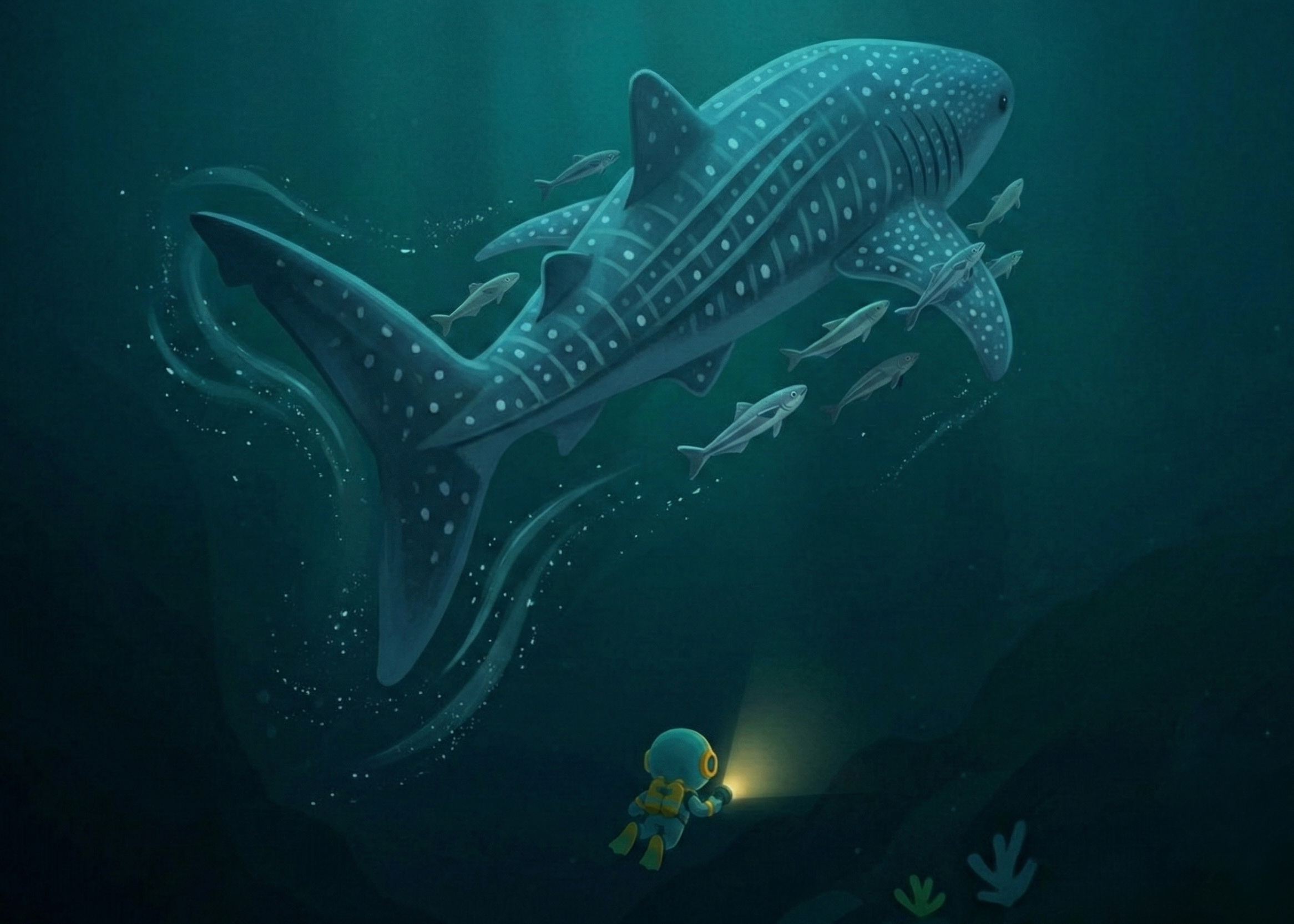
The ocean is full of amazing creatures that we are still learning about and seeing them close up fills me with awe. I'm so glad I got a chance to watch these fish in the wild and study their behaviors.
The shark dives deeper into the dark blue water. I watch its white spots fade away until they look like stars in the night sky. My sensors show a perfect spot for the sea lab just ahead. It has been a successful day of exploring.
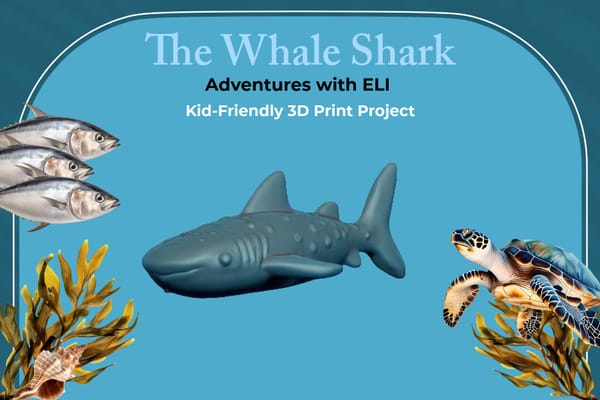
Print your own whale shark! With these easy 3D printing projects, families can bring ocean creatures to life. Perfect for curious little naturalists ready to craft their own discoveries at home.